The Rumi organisation began in Bergamo, Italy, supplying cast components before moving into wartime production and later lightweight motorcycles after the Second World War.
History of Rumi
From Bergamo engineering works to racing success and lasting enthusiast support.
Moto Rumi based its machines around a horizontal twin two-stroke 125cc engine, then moved into scooters in 1952 with the pressed-steel Scoiattolo, also known as the Squirrel.
The Formichino followed as a cast aluminium scooter with a monocoque-style structure, later evolving into 10-inch wheel versions and sportier variants such as the Tipo Sport.
The marque's competition reputation was strengthened by racing successes, including wins in the Bol d'Or 24-hour event at Montlhery, which inspired the Bol d'Or scooter.
Rumi went into liquidation during the 1960s, but the bikes and scooters remained especially loved in the UK, France, and across Europe.
History text
History of the marque and its machines.
The Rumi organisation was formed at the beginning of the century in Bergamo, Italy by Donnino Rumi and originally supplied cast components to the textile machinery industry.
At the outbreak of the Second World War, Rumi became involved in the manufacture of armaments, miniature submarines, and torpedoes. After the war, in 1950, the company moved into lightweight motorcycles.
Its power plant was based on a horizontal twin two-stroke engine of 125cc capacity. With the popularity of scooters increasing, Rumi began manufacturing the Squirrel or Scoiattolo, a pressed-steel monocoque scooter with tubular swinging arm rear suspension, teleforks, 14-inch wheels, and initially three gears.
Subsequent scooter models adopted a four-speed gearbox and electric starter and were reputed to be among the fastest scooters in production.
In 1952, Rumi was also producing the "Sport" and "Super Sport" motorcycles in single and twin carburettor forms. The Super Sport was later superseded by the Competizione or Gobbetto, a pure factory racer which won the Italian National Championship in 1954.
During 1955, the "Junior Corsa" and "Junior Gentleman" followed on from the Competizione. The Formichino or Little Ant scooter appeared in 1954 and was reputedly designed by Ing. Salvatti.
The Formichino body was largely produced in cast aluminium, with front and rear castings bolted to the engine to form a light and rigid construction. Rear swinging arm, chain case, and silencer box were also cast aluminium.
These scooters were first built with 8-inch wheels, but by 1958 they had moved to 10-inch wheels for better stability and ground clearance.
In 1958, Rumi also produced a sportier version called the "Tipo Sport", with a 22mm carburettor, larger exhaust pipes, and a higher compression ratio.
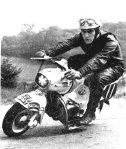
In 1957, 1958, and 1960 Rumi won the famous Bol d'Or 24-hour races at Montlhery in France, and later produced the Bol d'Or scooter named after the race.
In the UK, that model used dropped handlebars, chrome-plated aluminium cylinders, and twin carburettors, while French versions more often used a single 22mm carburettor.
Unfortunately, the company went into liquidation during the 1960s, and Donnino Rumi returned to sculpture and art.
Archive images
Historic visuals connected with the marque, the factory, and key machines.
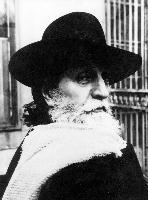
Donnino Rumi
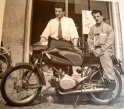
This fellow is Donnino Rumi, the renaissance sculptor who first sculptured the Rumi scooter in clay before building moulds in his aluminium foundry in Bergamo, Italy.
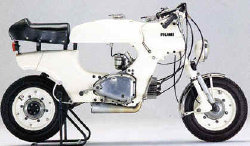
Bol d'Or replica
This scooter is a replica of the three-times winner of the 24hr Bol d'Or race in Montlhery during 1956, 1957, and 1958.
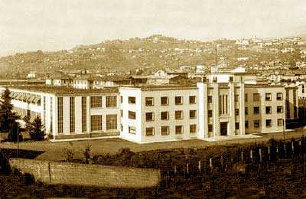
Rumi factory Bergamo
Factory image connected with the History of Rumi section.
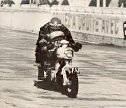
History archive image
Original visual from the dedicated history page.
History archive image
Original visual from the dedicated history page.
History archive image
Original visual from the dedicated history page.