Technical

Technical reference notes, diagrams, and workshop information for Moto Rumi owners.

Technical link

Frame

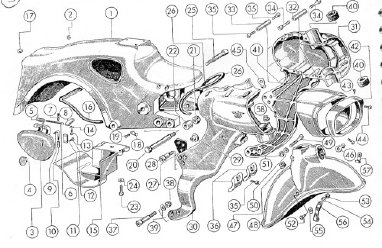
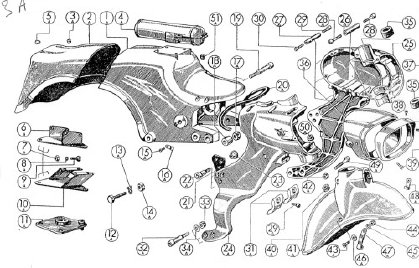
The Rumi frame is presented as a cast aluminium structure built from two principal sections.

  • The scooter frame is made up of two parts: the rear section and the front section.
  • Frame parts and mudguard are described as cast aluminium.
  • The finish can be polished to a bright chrome-like look or painted.
Frame

Technical link

Wheels and brakes

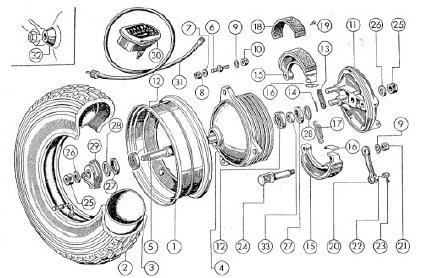
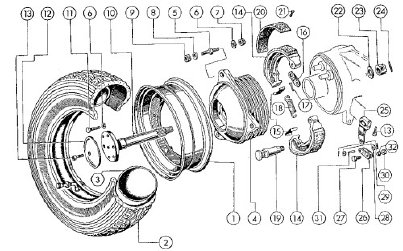
Wheel bearing sizes and brake relining notes are grouped here for quick reference.

  • Recommended front hub bearing size: 15 x 35 x 11, two required.
  • Recommended rear hub bearing size: 20 x 47 x 14, two required.
  • SAFTEK is referenced for brake relining support.
Wheels and brakes

Technical link

Ignition

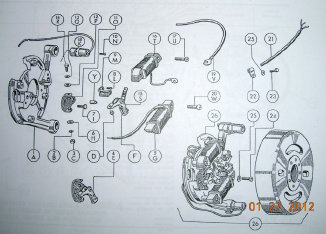
The ignition setup is one of the most detailed technical subjects on the site.

  • Twin contact breakers sit inside the flywheel and should be set to 0.012 inch or 0.30 mm.
  • The flywheel O mark is where the contacts are fully open at TDC; the A mark is where they just begin to open before TDC.
  • To advance timing, rotate the back plate clockwise. To retard timing, rotate it anti-clockwise.
  • Spark plug gap is listed as 20 to 22 thou, around 0.5 mm.
Ignition

Technical link

Gearbox

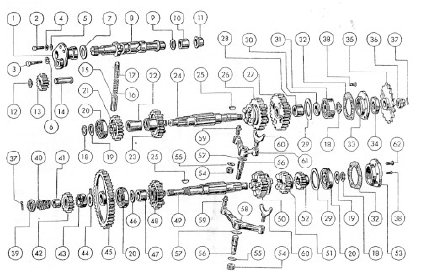
Gearbox details cover both ratios and the bearing and seal references owners need for rebuild work.

  • Post-1956 scooters use a 4-speed gearbox; earlier scooters and some early motorcycles used 3 speeds.
  • The foot change is described as toe and heel, one down and three up.
  • Four gearbox bearings are listed, including 6203 C3/C4 and a 3203 B double-row output bearing.
  • Output shaft seal is listed as 25 x 35 x 8.
Gearbox

Technical link

Clutch

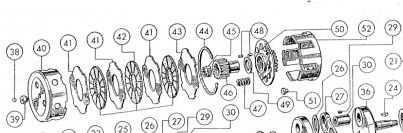
The original clutch guidance is specific about oil choice because wet clutch slip is a known issue.

  • The clutch runs in oil and uses three cork plates with three metal plates.
  • Straight classic SAE 30 oil is recommended to prevent clutch slippage.
  • Modern additive-heavy oils are warned against because they can reduce clutch friction.
Clutch

Technical link

Lights

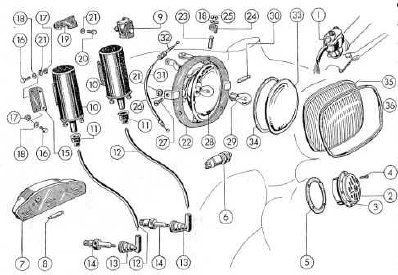
Lighting notes cover the original 6V arrangement and common later conversions.

  • Lights are powered by the 6V magneto lighting coil.
  • Early scooters used a swivelling headlight for cornering; later models used a fixed light.
  • Brake lights were not fitted as standard, though they are noted as a legal requirement on British roads.
  • A 12V system conversion is described as readily available.
Lights

Technical link

Wiring

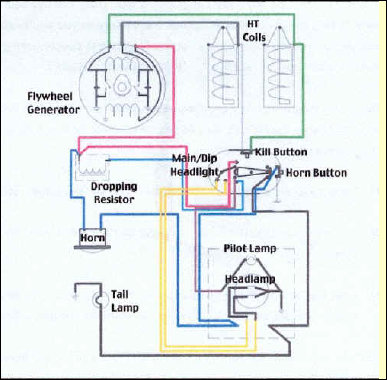
The wiring page explains both standard and battery-equipped arrangements.

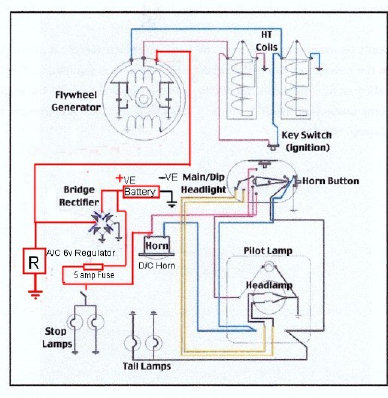
  • The original circuit diagram did not use a battery.
  • For brighter lights and better starting, the site notes owners may fit either a 6V or 12V battery system.
  • If a battery is used, a DC horn is required; if wired to AC, an AC horn should be used.
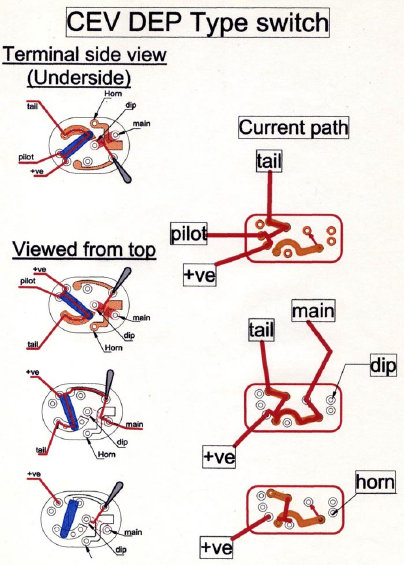
  • The CEV DEP switch is identified as the original Rumi switch, with alternative switch options also noted.
  • The page labels both standard non-battery and with-battery wiring diagrams.
  • Lighting and horn switch connections are shown for the original CEV DEP setup.
Wiring

Technical link

Crankshaft

Crankshaft specifications are listed mainly as bearing, seal, and needle roller references.

  • Outer crankshaft bearing: 6303 C3 or C4.
  • Inner crankshaft bearing: 6204 C3 or C4.
  • Outer crankshaft and side-plate seals: 17 x 35 x 7, three required.
  • Centre crankshaft seals: 25 x 42 x 10, two required.
  • Needle roller size is given as 9.80 mm long and 3 mm diameter with rounded ends.
Crankshaft

Technical link

Pistons and cylinders

This section distinguishes clearly between standard Formichino and Sport components.

  • Formichino scooters are said to use cast iron cylinders.
  • Tipo Sport models originally used chrome-plated aluminium cylinders before some later examples reverted to cast iron.
  • A three-ring piston is listed for the Formichino and a two-ring piston for the Sport.
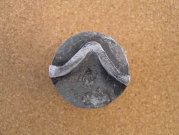
  • The piston crown is described as having an unusual V deflector, which the site identifies as a distinct Rumi trait.
Pistons and cylinders

Technical link

Chain and sprockets

The chain section ties gearing directly to wheel size.

  • 8-inch wheel scooters use a 14-tooth output sprocket.
  • 10-inch wheel scooters use a 13-tooth output sprocket.
  • Chain size is listed as 1/2 x 3/16 or metric 415 with 98 links.
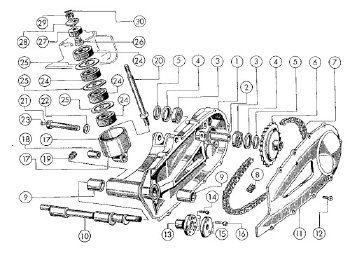
  • The chain and sprockets sit within the aluminium swing arm.
Chain and sprockets

Technical link

Forks and steering

Front suspension and steering data are kept concise but useful.

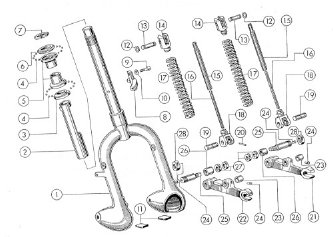
  • Suspension is by leading link with springs and limited damping.
  • Damping is adjusted by tightening and locking the nuts on the link arm pin.
  • There are 52 ball bearings in the steering column, 26 upper and 26 lower.
  • The steering ball cups use 26 x 4.75 mm balls in each cup.
Forks and steering

Technical link

Kick-start

Kick-start advice focuses on the known wear points in the quadrant and ratchet assembly.

  • The kick-start uses a quadrant and ratchet system.
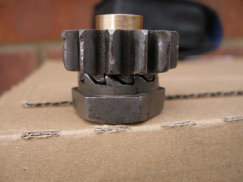
  • Wear typically appears on the ratchet teeth and bronze bush.
  • The page recommends reworking tooth angles and fitting a longer bush to reduce rocking and improve engagement.
Kick-start

Technical link

Gearchange setup

The linked subpage contains the most detailed setup procedure and two different methods.

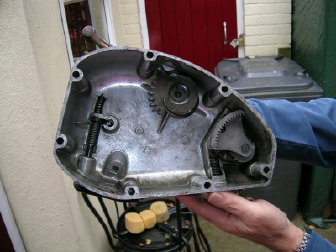
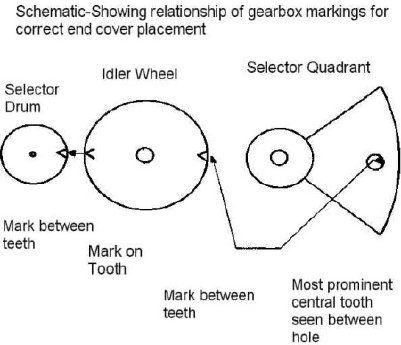
  • One method aligns grind marks on the gears, selector drum, and idler wheel to place the gearbox between second and third gear.
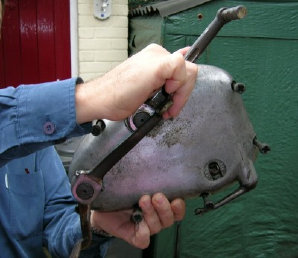
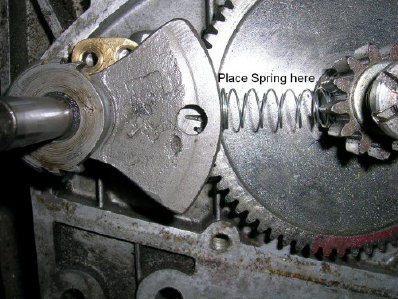
  • The quadrant is then positioned with its central tooth aligned to the idler mark and held by a spring while the side casing is lowered.
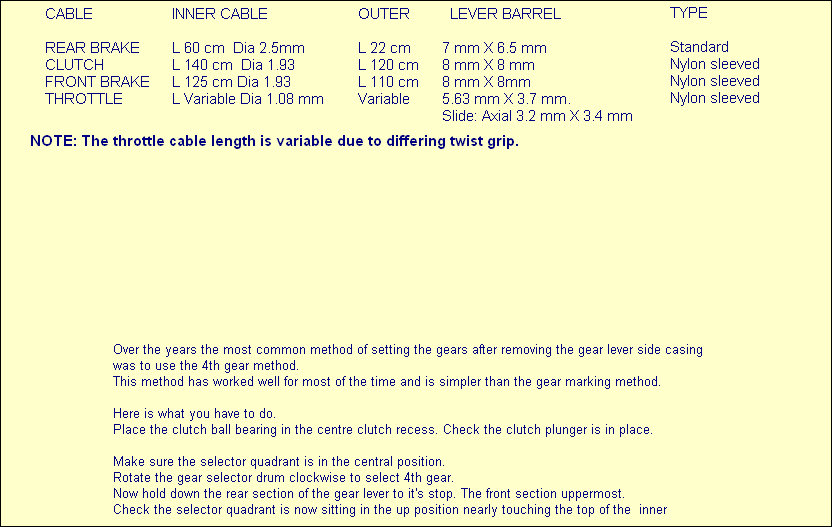
  • The alternative method holds the gear lever in fourth gear while fitting the casing and checking quadrant position.
  • The old page stresses keeping the quadrant in position until the casing bolts have been tightened.
  • The 4th gear method text says to place the clutch ball bearing in the centre clutch recess and confirm the clutch plunger is in place.
  • It then tells the owner to rotate the selector drum clockwise to select 4th gear before lowering the side casing.

Technical link

Cables

Cable dimensions are given specifically for scooter models.

  • The page labels this section for brakes, clutch, and throttle cables.
  • Rear brake cable: inner L 60 cm, diameter 2.5 mm; outer L 22 cm; lever barrel 7 mm x 6.5 mm.
  • Clutch cable: inner L 140 cm, diameter 1.93 mm; outer L 120 cm; lever barrel 8 mm x 8 mm.
  • Front brake cable: inner L 125 cm, diameter 1.93 mm; outer L 110 cm; lever barrel 8 mm x 8 mm.
  • Throttle cable: inner length variable, diameter 1.08 mm; outer variable; lever barrel 5.63 mm x 3.7 mm.
  • The throttle slide dimension is listed as axial 3.2 mm x 3.4 mm.
  • The note says throttle cable length is variable because of differing twist grip arrangements.
Cables

Technical link

Carburettor specifications

The second technical page combines carburation settings with quick ignition references.

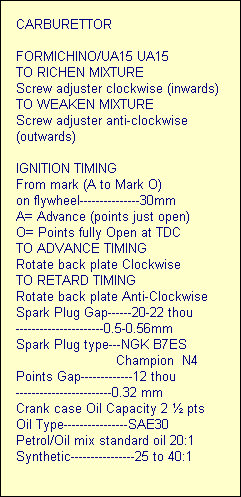
  • For the Formichino UA15, turning the adjuster screw clockwise richens the mixture and anti-clockwise weakens it.
  • A mark-to-mark flywheel measurement of 30 mm is listed between A and O.
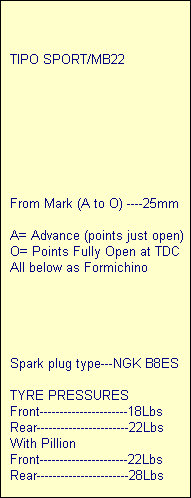
  • Spark plug types shown include NGK B7ES and Champion N4.
  • Crankcase oil capacity is listed as 2.5 pints and standard petrol/oil mix as 20:1, with synthetic guidance also given.
  • The carburettor and ignition panel also lists points gap as 12 thou or 0.32 mm.
  • Spark plug gap is given there as 20 to 22 thou, or roughly 0.5 to 0.56 mm.
  • The table includes models such as Moto Turismo, Moto Sport, Bi-carburatore, Scoiattolo, Scoiattolo Sport, Standard Formichino, Tipo Sport, Bold'Or, GT200, Regolarita, and Sei Giorni.
  • Needle length is shown as 58 mm on the carburettor specifications panel.
Carburettor specifications

Technical link

Oils

Oil advice from the linked page is explicit and conservative.

  • The page says straight classic SAE 30 should be used in the gearbox.
  • It warns that synthetic oils were not designed for early vehicles and may damage seals or cause clutch slip.
  • It suggests no more than 2.25 pints of SAE 30 or equivalent in the gearbox.
  • For petrol mix, classic mineral two-stroke oil at 20:1 or 25:1 is suggested, with semi-synthetic around 35:1.
  • The original text also says many riders are happy to use classic 20/50 oil.
  • It warns that synthetic additives may slowly damage crankshaft seals unless modern materials such as Viton are fitted.
  • One advisory mix figure given is about 200 ml per 5 litres for classic mineral oil.
  • For semi-synthetic, the page gives an approximate figure of 145 ml per 5 litres of petrol.
Oils

Technical link

Tyres

Tyre sizes and pressures are included on the linked technical page.

  • 8-inch wheel tyre size: 4.00 x 8.
  • 10-inch wheel tyre size: 3.50 x 10.
  • Tyre pressures listed are front 18 psi and rear 22 psi solo.
  • With pillion, the page lists front 22 psi and rear 28 psi.
Tyres