Scooters and Motorcycles

Scooters and motorcycles.

Models

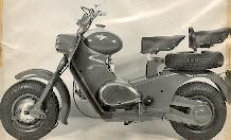
Moto Rumi started scooter production during 1953 and 1954, aiming at a market already shaped by Lambretta and Vespa across Europe.

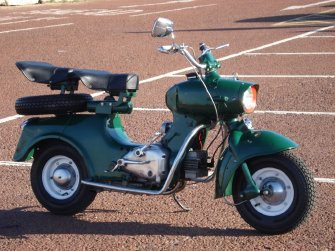
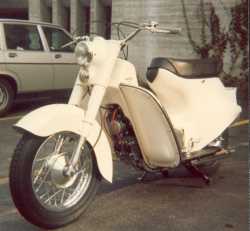
First came the cast aluminium Formichino. It proved expensive to build, so Rumi introduced the cheaper Formichino E, commonly known as the Little Ant, with a steel tube frame and steel panels and mudguards.

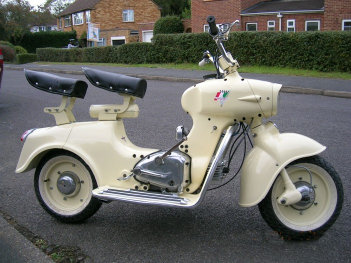
The first cast-alloy scooter used a single rear frame with an integral side toolbox. In 1956, this was superseded by the two-part rear-frame Formichino with a steel tube toolbox under the front saddle.

All scooter models used a 125cc twin-cylinder engine related to the motorcycle power unit, though in lower-output form.

The original cast aluminium Rumi found more success than the Model E, entering the French and UK markets in relatively large numbers, and then spreading to Belgium, Sweden, Switzerland, Austria, and beyond.

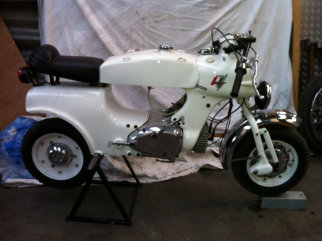
Racing success helped sales considerably, especially after three successive Bol d'Or wins at Montlhery. Rumi capitalised on that by producing the twin-carburettor Bol d'Or road scooter.

The success of the Rumi scooter looked assured until later Lambretta and Vespa models began to dominate the market in the early 1960s, pushing Rumi sales into the background.

Production ended around 1960, though parts and machines continued to circulate in the UK for several more years through dealers including Austin's in Harlesden and Stephens Scooter Mart in Richmond.

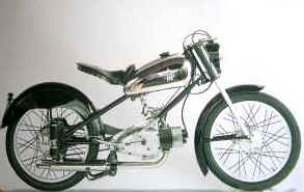
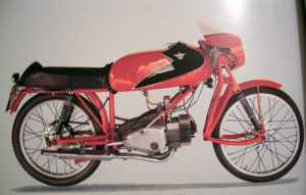
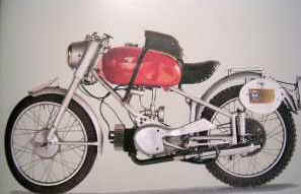
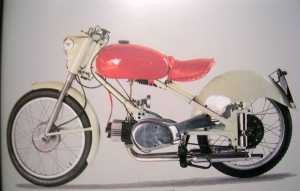
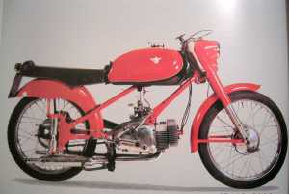
On the motorcycle side, Moto Rumi produced a wide range of machines for road use, road racing, dirt tracks, and scrambling, known today as motocross.

The motorcycles raced successfully in Italy during the mid to late 1950s, but never made a major commercial mark in the UK. Surviving UK examples are rare, with the Junior Gentleman and Sport among the best-known.

There are only a small number of Rumis left in the UK, with many still needing rebuilds and only a proportion remaining on the road.
Scooters

Scooters

Moto Rumi entered scooter production to compete in a fast-growing European market and built a reputation for light, fast, and distinctive machines.

  • Scoiattolo / Squirrel
  • Formichino cast aluminium model
  • Formichino E economy model
  • Formichino with 8" wheels as standard
  • Formichino with 10" wheels
  • Bol d'Or performance scooter
  • Bol d'Or with original racing bars
  • Tipo Sport with higher-spec tuning

The first scooter appeared in 1954 as a cast alloy machine with a single rear frame and integral toolbox, before later two-part rear frame versions arrived.

All scooter models used a 125cc twin-cylinder engine related to the motorcycle unit, though tuned for lower power output.

Rumi's racing success, especially at Montlhery, helped scooter sales in France and the UK.

The Model E was the cheaper steel-framed scooter and did not remain in production for long.

Motorcycles

Motorcycles

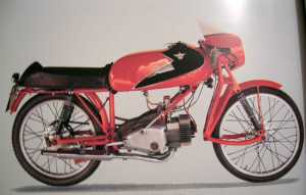
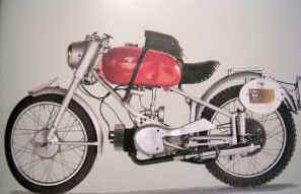
The motorcycle range included road-going and racing models, with several machines now remembered as central parts of the marque's competition history.

  • Turismo 125cc
  • Sport 125cc
  • Regolarita 125cc
  • Junior Gentleman 125cc
  • Junior Earles Sport 125cc
  • Bicarburatore 125cc
  • Turismo 3 velocita 125cc
  • GT Granturismo 200cc
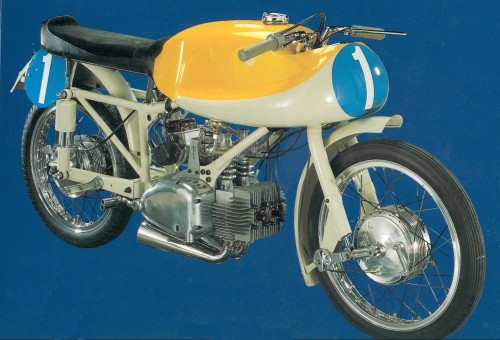
  • Gobbetto factory racer

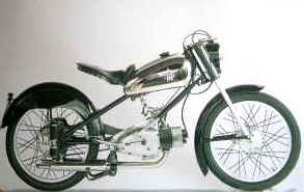
Motorcycles came first for Moto Rumi and ranged from road-going 125cc machines to specialist race bikes.

The site highlights the Gobbetto as a purpose-built racing machine, noting a top speed of around 136 km/h.

In the UK, surviving motorcycles are far rarer than scooters, with the Junior Gentleman and Sport among the better-known models.

Additional model notes

  • The Formichino began life with 8-inch wheels before later 10-inch wheel versions improved stability and clearance.
  • The economy Model E used a steel tube frame with steel panels and mudguards instead of the cast aluminium layout.
  • The Bol d'Or used twin carburettors in UK specification, while French examples often ran a single 22mm carburettor.
  • The page also references the revolutionary four-stroke V 98/125/175cc project that never entered production.
  • The Gobbetto was designed purely for racing and is described on the source page with a top speed of 136 km/h.

Model list

  • The Squirrel
  • The Model "E"
  • Formichino with 8" wheels as standard
  • The Bold'Or with original racing bars
  • Formichino with 10" wheels
  • GT Granturismo 200cc (1956)
  • Junior Gentleman 125cc (1962)
  • Turismo 125cc (1950)
  • Sport 125cc (1952)
  • Regolarita 125cc (1952)
  • Junior Earles Sport 125cc (1956)
  • Bicarburatore 125cc (1955)
  • Turismo 3 velocita 125cc (1953)
  • Gobbetto